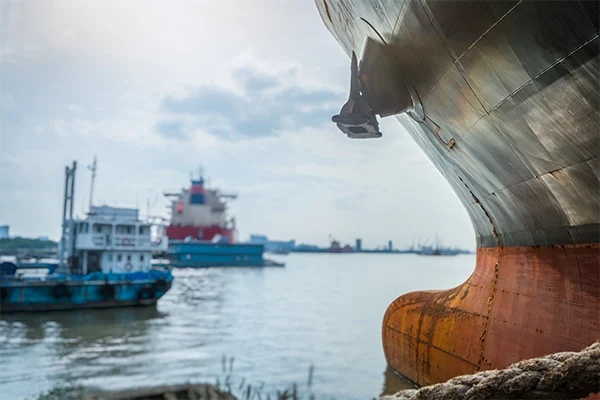
The sea has always been a symbol of trade, adventure, and connection between cultures. Today, the shipping industry represents much more: it is the invisible backbone that sustains globalization. You know this, because every operation in a port, every ship on the high seas, and every supply delivered on time is part of a global network that never stops.
The strategic importance of maritime corridors
Maritime corridors are the highways of international trade. More than 90% of trade in goods in the European Union passes through these routes, making maritime transport an essential pillar of any country’s competitiveness.
The control, maintenance, and modernization of these corridors not only guarantee the flow of goods, but also ensure the stability of key sectors such as food, energy, and technology.
The role of innovation in maritime safety
Those of you who work in this field are aware that safety is never negotiable. The incorporation of state-of-the-art radars, satellite communication systems, and real-time monitoring has significantly reduced risks on the high seas.
In addition, predictive maintenance and equipment sensorization allow problems to be detected before they become critical breakdowns, increasing crew protection and reducing ship downtime.
Supplies and maintenance as a competitive advantage
A ship that stops due to a lack of supplies loses money and opportunities. That’s why you’ll see that having reliable suppliers who can deliver valves, spare parts, and tools at the right time makes all the difference.
Fast supply services at strategic ports not only ensure continuity of operations, but also strengthen the reputation of fleets that complete their routes without delays. Here, specialized suppliers become strategic allies in competitiveness.
Decarbonization and energy transition in shipping
The future of the shipping industry is closely linked to sustainability. You are already seeing the introduction of alternative fuels such as LNG, hydrogen, and green ammonia. Added to this are energy efficiency projects that seek to reduce consumption and emissions without compromising operational capacity.
The challenge is great, but so are the opportunities: those who commit to sustainable solutions now will be better positioned in a global market that increasingly demands environmental commitment.
Training crews for a new context
Technological changes require better-trained crews. Traditional experience is no longer enough: digital skills, knowledge of environmental regulations, and proficiency in advanced technological tools are now required.
You know that investing in continuous training is key to ensuring safety and efficiency. A trained crew is able to get the most out of new navigation systems and the most innovative equipment.
Conclusion
The shipping industry is much more than just ships and ports: it is a constantly evolving global network, where innovation, safety, and sustainability lead the way. Those of you who are part of this industry are protagonists in a transformation that will define the future of global trade.
The sea will continue to be the main route for progress, and those of you who know how to anticipate challenges will be prepared to take advantage of all the opportunities that globalization and the energy transition bring within your reach.
