
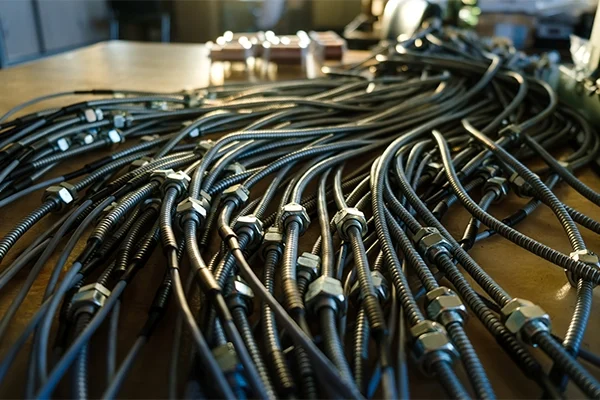
Industrial clamps and fittings play a crucial role in the stability, safety, and efficiency of facilities. These fasteners not only help join components but also ensure that pipes, cables, and structures remain secure and stable. In an industrial setting, where vibrations, pressures, and loads are commonplace, the right clamps ensure that everything stays in place, preventing misalignment, leaks, and failures.
Those of you who work in demanding environments know that the quality of fasteners can make the difference between a smooth operation and a costly problem. Below, you’ll see the importance of clamps and fittings in creating safe and efficient industrial installations.
What Are Industrial Clamps and How Do They Work?
Clamps are fasteners used to join pipes, cables, hoses, or machinery components. They are designed to provide a secure and stable hold, absorbing vibrations and ensuring that parts remain in place throughout operation.
Most Common Types of Flanges:
Metal flanges: made of stainless steel or galvanized steel, ideal for withstanding demanding pressure and temperature conditions.
Plastic or nylon flanges: lightweight and corrosion-resistant, used in lighter systems or less aggressive environments.
Large-diameter flanges: used in industrial applications where pipes are large in size, such as in water or steam distribution systems.
Metal flanges are the most widely used in industrial applications due to their high strength and reliability, especially in sectors such as mining, the chemical industry, and the shipbuilding sector.
Accessories: Key Components for Reinforcing the Installation
Accessories are additional parts used to reinforce joints or adapt to different installation sizes and materials. These components ensure better fastening and stability in complex systems where flanges alone cannot provide adequate support.
Most Common Types of Fittings:
Flange reinforcement fittings: increase clamping capacity in large connections or under high-pressure conditions.
Sealing rings or gaskets: placed between the flange and the pipe to ensure a tight seal and prevent leaks.
Adjustable fittings: designed to adapt to different types of connections or diameters.
These accessories make installations safer, more durable, and capable of withstanding extreme conditions without compromising performance.
The Importance of Choosing the Right Flanges and Accessories
Selecting the correct flanges and accessories is essential to ensuring the integrity and performance of the system as a whole. If they are not chosen properly, the consequences can be serious: leaks, excessive vibrations, pressure failures, and more.
Factors to consider when choosing flanges and accessories:
Material type: The material must be suitable for the operating environment (corrosion, temperature, pressure).
Pipe or component size: Flanges must be the correct size to ensure optimal clamping.
Operating conditions: temperature, pressure, vibration, or exposure to chemicals.
Regulations and certifications: Ensure that flanges and fittings comply with current regulations to guarantee safety.
Choosing the right material (stainless steel for harsh environments or nylon for lightweight installations) ensures greater durability and stability over time.
Applications of Flanges and Fittings in Industrial Installations
Flanges and fittings have multiple applications across various industrial sectors. Some key examples include:
In the chemical industry: where flanges ensure a tight seal in piping that transports aggressive liquids and gases.
In the shipbuilding industry: to ensure the stability of piping, hydraulic systems, and machinery subjected to constant vibration.
In construction: as fastening components in metal structures or HVAC (heating, ventilation, and air conditioning) systems.
In mining: to join large-diameter pipes that transport materials under high pressure.
In all these sectors, flanges and fittings not only provide stability and safety but also allow for adaptation to changing conditions and ensure that systems remain functional over long periods of time.
Maintenance and Inspection of Flanges and Fittings
Although flanges and fittings are durable components, their maintenance is essential to ensure their long-term proper functioning. The buildup of dirt, corrosion, or wear can compromise their clamping ability.
Recommended maintenance practices:
Periodic inspection: Check the condition of the flanges, especially in high-pressure systems.
Replacing gaskets: Inspect the sealing gaskets and replace them when they show signs of wear.
Lubrication: In some cases, apply appropriate lubricants to prevent corrosion.
Adjustment and retightening: Check that the flanges are secure and adjust them if necessary to prevent leaks or misalignment.
Proper maintenance ensures that flanges and fittings continue to function correctly and extends their service life, preventing future problems.
Conclusion
Flanges and fittings are essential components for ensuring the safety, stability, and efficiency of any industrial or marine installation. Choosing the right components—both in terms of size and material—is crucial for preventing system failures and optimizing processes.
If you select high-quality flanges, made from durable materials and complemented by the necessary accessories, you will ensure a safer, more durable, and more efficient installation. Furthermore, regular maintenance and proper installation of these components will allow you to maximize their performance over time.
