The industry is entering a new era, marked by digitization, sustainability, and automation. You know that every component, from a gasket to an advanced filter, must not only meet the need for strength and durability, but also integrate with intelligent management systems. Sealing and filtering systems are part of this evolution and are emerging as key players in the transition to a more efficient and connected industry.
Digitization of control systems
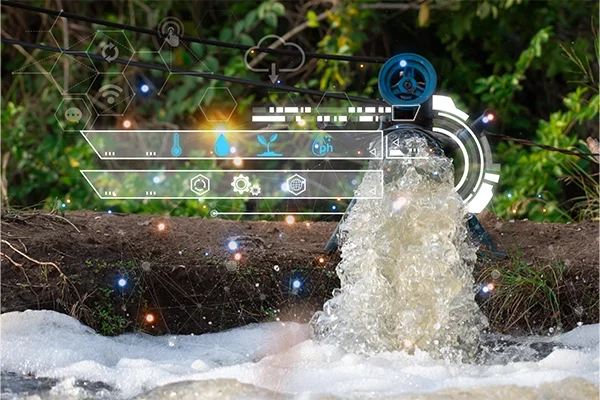
The advent of Industry 4.0 has transformed the way industrial processes are monitored. In the case of sealing and filtration, smart sensors already allow real-time monitoring of the condition of seals and filter saturation.
These systems not only detect anomalies immediately, they also store historical data that helps predict behavior and plan maintenance before a failure occurs.
Precision filtration with new technologies
The filters of the future are designed to retain increasingly smaller particles without affecting fluid flow. Technologies such as nanofiltration, multilayer membranes, and self-regenerating filters are revolutionizing sectors such as shipbuilding, pharmaceuticals, and energy. You’ve seen it: maintaining fluid purity is vital for efficiency and safety, and now it can be done with less energy consumption and greater durability.
Sealing adaptable to changing environments
Traditional seals have given way to more sophisticated solutions. You will see that there are already smart materials capable of modifying their properties depending on pressure or temperature. These advances allow systems to be more flexible and safer in extreme conditions, reducing the risk of leaks and extending the useful life of equipment.
These types of innovations are especially useful in the naval sector, where the variability of environments requires reliable and adaptive solutions.
Integration with sustainability
Sustainability continues to set the course for industrial innovation. You know that sealing and filtration systems must not only be efficient, but also environmentally friendly.
Current trends point to filters made from recyclable materials, seals designed to reduce waste, and processes that minimize environmental impact. In addition, smart solutions optimize consumption and reduce emissions, aligning with international commitments to reduce carbon footprints.
The role of predictive maintenance
Thanks to the combination of sensors and data analysis, predictive maintenance is now a reality. You will have seen for yourselves: monitoring systems can give advance warning of when a seal will lose its effectiveness or a filter will reach its saturation limit.
This approach not only reduces unexpected downtime, it also lowers operating costs and enhances safety by allowing interventions to be carried out in a planned and precise manner.
Conclusion
Sealing and filtration systems are evolving towards a future where digitization, innovation in materials, and sustainability are key players. Those of you who work in demanding environments know that investing in these technologies is not optional, but essential to maintaining competitiveness and safety.
Tomorrow’s industry will be cleaner, more efficient, and more connected, and in that scenario, every smart seal and filter will make a difference. Because the future of sealing and filtration is not only technical: it is strategic.
