
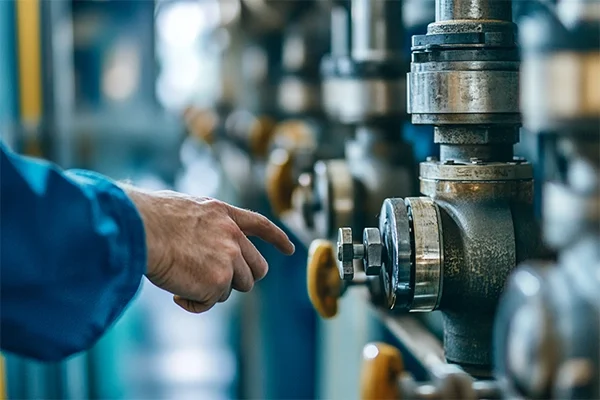
Elegir la válvula adecuada para una instalación industrial o naval es una tarea más compleja de lo que parece. Una mala decisión puede provocar fugas, pérdida de presión, averías costosas e incluso riesgos para la seguridad de la instalación. Vosotros, que trabajáis diariamente con sistemas hidráulicos, tuberías, bombas y circuitos presurizados, sabéis que una válvula incorrecta puede comprometer todo el sistema.
A continuación, veréis los errores más habituales al seleccionar válvulas y cómo evitarlos para asegurar un funcionamiento estable, seguro y eficiente.
Error 1: No considerar el tipo de fluido
El tipo de fluido influye directamente en el material, diseño y funcionamiento de la válvula. No es lo mismo trabajar con agua, aceite, combustible, vapor o fluidos corrosivos.
Si no se tiene en cuenta este factor, la válvula puede deteriorarse rápidamente o generar fallos inesperados.
How to avoid it:
Identify the exact fluid and its corrosion level
Choose compatible materials (stainless steel, brass, bronze, etc.)
Consider the fluid’s viscosity and temperature
A specialized supplier can guide you in making the right selection.
Mistake 2: Choosing a valve type that is inappropriate for the function
Each valve has a specific function: opening/closing, regulating flow, preventing backflow, stabilizing pressure, etc.
For example:
A gate valve is not suitable for regulating flow
A butterfly valve may not be ideal for very high pressures
A check valve is not designed to control flow
How to avoid it:
Clearly define what you need: shutoff, regulation, or safety?
Select the valve designed for that task
Consult technical data sheets and performance curves
The right valve increases the system’s safety and efficiency.
Error 3: No considerar la presión y la temperatura de trabajo
Uno de los fallos más comunes es instalar una válvula que no soporta la presión o temperatura real del sistema. Esto provoca fugas, deformación interna e incluso roturas.
Cómo evitarlo:
Revisad el rango de presión nominal (PN)
Comprobad la temperatura máxima permitida
Tened en cuenta picos de presión o cambios bruscos
La válvula debe tener un margen superior al que exige vuestra instalación.
Error 4: Instalar conexiones inadecuadas
Elegir un tipo de conexión incorrecto puede complicar la instalación y generar fugas. Las conexiones más habituales son:
Roscadas
Bridadas
Soldadas
De compresión
Cómo evitarlo:
Revisad el tipo de tubería
Asegurad compatibilidad entre válvula y sistema
Comprobando el tamaño y dirección de flujo
Esto evita problemas durante la instalación y mejora la estanqueidad.
Error 5: Olvidar el mantenimiento y accesibilidad
Una válvula puede fallar no por mal uso, sino por mala ubicación. Si está instalada en lugares difíciles de acceder, su mantenimiento se vuelve complicado y termina descuidándose.
Cómo evitarlo:
Colocad las válvulas en zonas accesibles
Preved espacio suficiente alrededor
Considerad la facilidad de desmontaje
Una válvula bien instalada dura más y es más fácil de inspeccionar.
Error 6: No elegir materiales resistentes al entorno
En instalaciones navales, la salinidad del ambiente acelera la corrosión. En industrias químicas, ciertos materiales no soportan agentes agresivos.
Cómo evitarlo:
Seleccionad materiales anticorrosión
Tened en cuenta vibraciones, humedad y ambiente
Optad por cuerpos robustos y sellos adecuados
Una elección correcta alarga significativamente la vida útil del sistema.
Mistake 7: Not Working with a Specialized Supplier
A common mistake is purchasing valves without technical advice. A lack of information can lead you to choose a model that does not meet your requirements.
How to avoid it:
Choose suppliers that specialize in industrial systems
Request personalized advice
Check certifications and warranties
A reliable supplier will help you avoid costly mistakes.
Conclusion
Selecting industrial valves is a technical decision that requires information, analysis, and advice. If you avoid these common mistakes—and choose certified materials, suitable valves, and the correct connections—you can ensure safer, more efficient, and longer-lasting operation of your facility.
With the right knowledge and the support of a specialized supplier, you’ll be prepared to make the right decisions and protect your systems in the long term.
