In any industrial, marine, or hydraulic facility, precise control of pressure and temperature is essential to ensuring the safety, efficiency, and durability of systems. Pressure gauges and thermometers are basic yet indispensable instruments: they enable the detection of anomalies, optimize performance, and prevent failures that could result in costly damage.
You, who work with equipment subjected to demanding conditions, know that inaccurate measurements can lead to operational problems, unnecessary consumption, or even risks to the facility. That is why choosing the right instrument and keeping it in perfect condition is essential for any industrial process.
Pressure Gauges: The Key to Precise Pressure Control
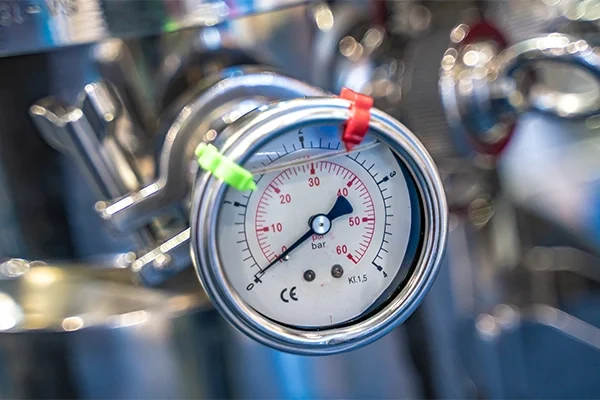
A pressure gauge is an instrument designed to measure the pressure of a fluid within a system. In industrial and marine installations, this monitoring is vital to ensure that pipes, pumps, valves, and equipment operate within safe limits.
Most Common Types of Pressure Gauges:
Analog pressure gauge: reliable, durable, and ideal for systems that require direct visual readings.
Digital pressure gauge: offers greater accuracy and allows measurements to be recorded.
Glycerin pressure gauge: designed to absorb vibrations and provide stable readings in machinery subject to constant vibration.
Advantages of the right pressure gauge:
Greater system safety
Early detection of faults or pressure drops
Lower risk of overloads or breakdowns
Real control over process efficiency
You’ll see that choosing the right pressure gauge is the first step in keeping any installation under control.
Industrial thermometers: precision in thermal control
The industrial thermometer measures the temperature of fluids and systems, a determining factor in processes where thermal stability is crucial. Excessive temperature can degrade materials, affect pressure, or damage sensitive components.
Most common types:
Bimetallic thermometer: sturdy and durable, ideal for demanding work environments.
Digital thermometer: high accuracy and fast response, useful in dynamic processes.
Glass or liquid-filled thermometer: classic and simple, suitable for basic measurements.
Why a good thermometer is essential:
Ensures stability in thermal processes
Prevents failures due to overheating
Helps optimize the performance of engines and hydraulic systems
Enables compliance with safety and control regulations
The right temperature is synonymous with efficiency and safety.
The relationship between pressure and temperature in industrial systems
Pressure and temperature are directly related; a change in one variable affects the other. That is why it is essential to have pressure gauges and thermometers that work in coordination.
In hydraulic, marine, or thermal systems, monitoring both parameters allows you to:
Prevent failures in valves and seals
Avoid overpressure
Detect leaks early
Ensure stable equipment performance
If one of the two parameters gets out of control, the entire system can be compromised.
Materials and Features to Consider
When selecting pressure gauges and thermometers, you should take several technical factors into account:
Body material: stainless steel for high corrosion resistance.
Connection type: radial, rear, or special, depending on the installation.
Measuring range: suitable for the system’s actual pressure or temperature.
Vibration damping: essential in marine or heavy machinery.
Fluid compatibility: some materials are not resistant to corrosive agents.
Choosing the wrong material or design can significantly reduce the instrument’s service life.
Maintenance: key to safe and accurate readings
It is not enough to simply install a good pressure gauge or thermometer; it must be inspected periodically. Preventive maintenance allows you to:
Ensure reliable readings
Detect wear or damage to the instrument
Replace parts before they fail
Avoid operational risks
An uncalibrated instrument can provide erroneous readings that lead to serious failures within the system.
Conclusion
Pressure gauges and thermometers are essential for any industrial environment that requires control, precision, and safety. Choosing the right instruments, installing them correctly, and maintaining them in good condition ensures optimal performance of the entire system.
By choosing high-quality, durable products tailored to your needs, you will ensure reliable measurements, more efficient processes, and a much safer system.
