
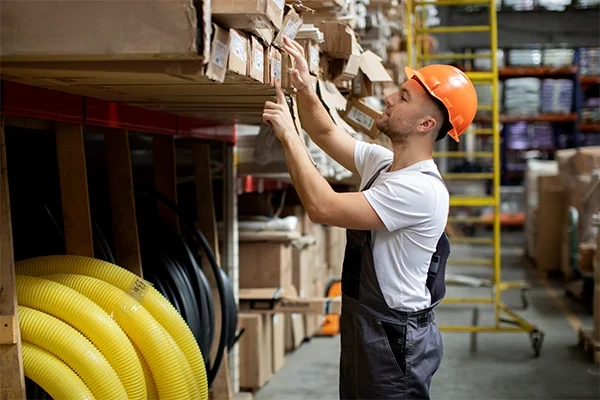
In the industrial supply chain, efficiency starts in the warehouse. A well-organized hardware store not only ensures immediate availability of materials, but also reduces costs, waiting times, and production errors. In an industry where every screw counts, inventory management has become a key part of overall performance.
You, who know the importance of having the right tool at the right time, know that a good storage system is not measured by space, but by precision in management.
The role of the warehouse in industrial productivity
The warehouse of an industrial hardware store is much more than a place to store materials. It is a strategic point that connects purchasing, supply, and production. Every delay or lack of control can cause chain stoppages, affect delivery times, and decrease the overall efficiency of the workshop or plant.
Having an organized structure—zoning by product type, rotation by demand, and traceability systems—improves agility and prevents losses. It also helps maintain the quality of stored parts, especially those that require protection from moisture or corrosion.
Digitization and smart inventory control
New technologies have revolutionized warehouse management. Digital systems allow you to record every movement in and out, perform automatic counts, and keep availability updated in real time.
Smart inventory platforms integrate with barcodes, RFID tags, and management software (ERP), making it easy to instantly identify any product. This allows hardware stores to anticipate demand, avoid overstocking or shortages, and improve purchasing planning.
You will see that these types of solutions not only optimize logistics work, but also improve the industrial customer experience, which values speed and accuracy in every order.
Physical organization: ergonomics and safety
An efficient warehouse must also be safe. The layout of the space, the height of the shelves, and access to materials directly influence productivity and worker health.
Modern hardware stores implement industrial ergonomics principles to reduce movement, minimize effort, and increase restocking speed. In addition, the use of signage, adequate lighting, and certified handling equipment reinforces safety in the work environment.
Preventive maintenance of tools and equipment
A fundamental part of industrial hardware store management is the maintenance of frequently used equipment: power tools, compressors, pneumatic systems, and measuring devices.
Establishing a maintenance schedule prevents breakdowns and extends the useful life of equipment. In many cases, well-planned preventive maintenance can reduce annual replacement costs by up to 30%. You know that a tool in good condition not only works better, but also protects the operator and ensures more accurate results.
Sustainability applied to industrial logistics
The sustainable approach also extends to warehouses. Hardware stores are implementing policies to reduce waste, recycle materials, and optimize internal transportation to lessen their environmental footprint.
The use of reusable packaging, energy efficiency, and responsible management of metal waste are practices that strengthen the company’s reputation and contribute to a cleaner and more efficient production model.
Conclusion
Efficient warehouse management in industrial hardware stores is a combination of organization, technology, and commitment to quality. Every screw, valve, or tool must be in the right place, available at the right time, and in optimal condition.
You, who are part of the industrial machinery, know that behind every successful process there is well-planned logistics. Committing to digitization, safety, and sustainability is not a fad, but a strategy that drives competitiveness and ensures long-term growth.
