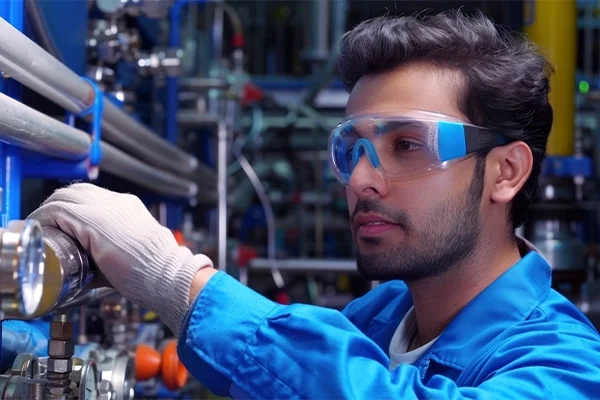
In any industrial facility, from naval plants to energy complexes, precision in fluid control is essential. Valves, pressure gauges, thermometers, and other instruments are not mere components: they are the heart that regulates the safety and efficiency of the entire system. Those of you who work in technical environments know that a poorly calibrated valve or a faulty instrument can shut down an entire production line.
That is why the selection, maintenance, and integration of valves and instrumentation should be considered a strategic investment rather than an operating expense.
The vital role of valves in industrial systems
Valves have a clear mission: to control the flow of liquids, gases, or steam within a network. There are different types—ball, gate, butterfly, or check valves—and each one plays a specific role depending on the pressure, temperature, and type of fluid circulating.
Selecting the right valve ensures stable flow, prevents leaks, and reduces equipment wear. In addition, the incorporation of automated valves has transformed industrial operations, allowing for more precise and rapid remote control.
Instrumentation: measuring to improve
Industrial instrumentation acts as the senses of a facility. Thermometers, pressure gauges, flow meters, and sensors provide real-time data that allows system performance to be adjusted.
Thanks to constant measurement, operators can detect deviations, prevent failures, and keep production within optimal parameters. You will see that, in sectors such as shipbuilding and energy, precision instrumentation is the difference between continuous efficiency and unexpected downtime.
Digital integration and intelligent automation
Technological evolution has also reached this field. Today, valve and instrumentation systems are integrated with digital platforms that allow all variables to be monitored from a single interface.
Smart sensors send constant information on pressure, flow, or temperature, facilitating immediate decisions. Automation also reduces the margin for human error and ensures a faster response to any disruption in the process.
Materials and durability: keys to safe performance
The environment in which these components are installed determines their durability. That is why materials play a crucial role. Stainless steel, bronze, and technical polymers stand out for their corrosion resistance and reliability in high temperatures or saline environments, which are common in the maritime industry.
Choosing valves and instruments made from high-quality materials not only extends their service life but also reduces long-term maintenance costs.
Maintenance and calibration: the guarantee of performance
Just as important as installing a valve or pressure gauge is keeping it properly calibrated. Regular checks ensure that instruments continue to provide accurate readings and that valves respond as quickly as they did on the first day.
You know that a well-maintained system not only improves safety, but also optimizes energy consumption and prevents operational losses.
Conclusion
Valves and instrumentation are invisible but indispensable pillars of any industrial system. Their reliability defines the level of efficiency, safety, and sustainability of operations.
Investing in quality products, combined with intelligent management and proper maintenance, is not a luxury: it is a technical decision that guarantees continuity, precision, and control.
You, who know the importance of detail, know that behind every smooth and safe process there is a well-chosen valve and an instrument that never fails.
